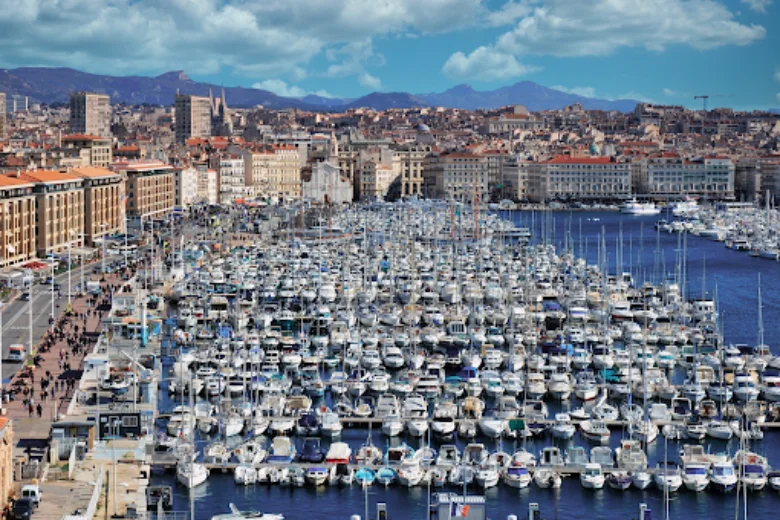
There are few cities in Europe where food feels as inseparable from the landscape as it does in Marseille. France’s oldest city – rugged, multicultural, and endlessly energetic – has spent centuries absorbing culinary influences from across the Mediterranean. Greek traders, North African communities, Italian migrants, and Provençal fishermen have all helped shape a food culture unlike anywhere else in the country.
In Marseille, cuisine is not polished or overly delicate. It is bold, salty, fragrant, and deeply tied to the sea. For travelers eager to experience Marseille properly, discovering its cuisine means embracing the city’s rough-edged authenticity, and understanding that some of its best meals are found not in luxury dining rooms, but in noisy harborside eateries filled with locals.
Begin at the Vieux-Port
The heart of Marseille’s culinary scene is the Vieux-Port, the historic Old Port that has defined the city for more than 2,600 years. Every morning, fishermen sell their catch directly from small boats docked along the quay. Sea bass, red mullet, monkfish, sea urchins, octopus, and glistening sardines appear on ice-covered tables as locals haggle over the freshest seafood available.
The port provides the ingredients and atmosphere that define Marseillais dining. Cafés spill onto waterfront terraces, servers weave through crowds carrying platters of oysters and chilled rosé, and conversations stretch long into the evening beneath the Mediterranean sun. For first-time visitors, wandering along the harbour before lunch offers the perfect introduction to the city’s culinary rhythm.
Bouillabaisse: Marseille’s legendary dish
No meal is more closely associated with Marseille than bouillabaisse. Originally created by fishermen using unsold rockfish from the day’s catch, the dish has evolved into one of France’s most iconic culinary exports. Traditionally, several kinds of Mediterranean fish are simmered with saffron, fennel, garlic, tomatoes, and herbs, before being served in stages. The broth arrives topped with toasted bread and fiery rouille sauce, followed by the fish itself.
The best versions remain fiercely safeguarded by local culinary tradition. Many restaurants along the waterfront proudly advertise their commitment to the authentic preparation methods established by Marseille’s historic bouillabaisse charter. While visitors can find simplified tourist versions across the city, seasoned food lovers know the most memorable bowls are often served in understated portside restaurants where recipes have been passed down through generations.
Mediterranean influences
What makes Marseille’s food scene especially distinctive is its multicultural character. Unlike much of traditional French cuisine, Marseille’s flavours often feel closer to North Africa, Italy, Greece, and the Levant. Spices such as cumin, coriander, saffron, and harissa regularly appear alongside Provençal staples like olive oil and thyme. Markets overflow with mint, preserved lemons, chickpeas, and fresh seafood.
This cultural fusion is perhaps best experienced in neighbourhoods surrounding the port, where diners can move seamlessly between Algerian couscous restaurants, Corsican delicatessens, Neapolitan pizzerias, and classic Provençal seafood cafés. Few French cities embrace culinary diversity as naturally or enthusiastically as Marseille.
Explore the markets
To understand Marseille’s food culture properly, visitors should spend time exploring the city’s open-air markets.
Marché des Capucins in the Noailles district is among the city’s liveliest. Often described as Marseille’s “belly,” the market bursts with North African spices, fresh herbs, olives, pastries, seafood, and exotic produce sourced from across the Mediterranean world. The scents alone – grilled meats, orange blossom, cumin, and fresh mint – capture the essence of Marseille’s layered culinary identity.
Meanwhile, smaller neighbourhood markets throughout the city showcase Provençal specialties including tapenade, anchovies, goat cheese, and seasonal fruits ripened under the southern French sun.
Ultimately, Marseille’s cuisine is best discovered slowly and informally. Sit at crowded waterfront cafés. Order dishes you do not recognize. Spend afternoons wandering noisy markets and evenings lingering over seafood and wine beside the harbour.
To eat well in Marseille is to understand the Mediterranean at its boldest: rich with history, layered with cultures, and carried always by the rhythm of the sea.