Colourful colonial streets, Caribbean sea breezes, and centuries of layered history have made Cartagena one of Latin America’s most captivating destinations. But beyond the city’s famous balconies, fortresses, and beaches lies another essential part of its identity: a deeply rooted culinary culture shaped by Indigenous, African, Spanish, and Caribbean influences.
Cartagena’s cuisine tells the story of the city itself. As one of the most important ports in the Spanish colonial empire, Cartagena became a crossroads for ingredients, traditions, and people arriving from across the Atlantic world. Over generations, these influences blended into a bold and distinctive food culture defined by tropical produce, fresh seafood, fragrant spices, and slow-cooked comfort dishes. For visitors willing to explore beyond the postcard-perfect plazas, Cartagena offers one of Colombia’s richest culinary experiences.
A cuisine shaped by the Caribbean
Unlike the heavier Andean dishes found in cities such as Bogotá or Medellín, Cartagena’s cuisine is unmistakably Caribbean in character. Coconut, plantain, cassava, tropical fruits, seafood, and rice form the foundation of many local dishes, while herbs and spices contribute warmth and depth rather than intense heat.
African culinary traditions, brought to the region during the colonial era, remain especially influential. Techniques involving fried foods, coconut rice, stews, and plantain-based dishes continue to shape everyday cooking throughout Cartagena and Colombia’s Caribbean coast. The result is food that feels vibrant, comforting, and deeply connected to the city’s coastal environment.
The wonders of Cartagenero street food
One of the best ways to experience Cartagena’s culinary heritage is through its street food scene. Across the city’s plazas and narrow stone streets, vendors sell freshly fried snacks, tropical fruits, grilled meats, and seafood dishes that have become part of Cartagena’s daily rhythm. Among the most iconic are arepas de huevo – deep-fried corn cakes stuffed with egg and sometimes minced meat. Crispy on the outside and rich within, they remain one of the city’s most beloved snacks.
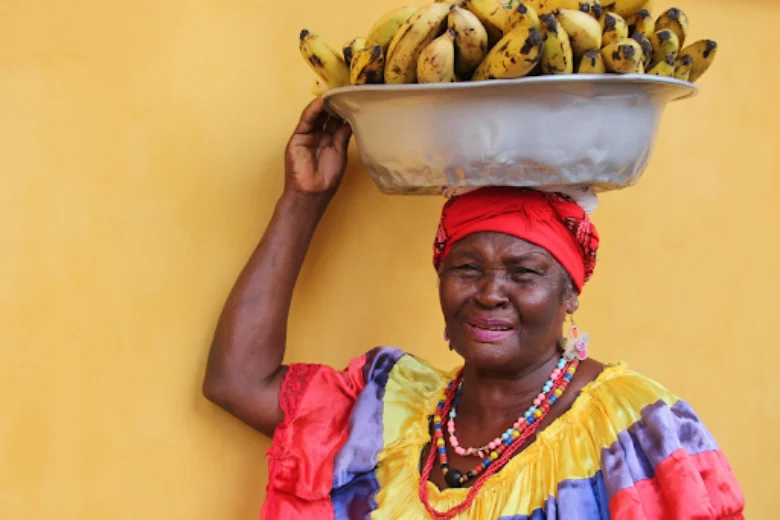
Equally popular are empanadas, often filled with beef, chicken, or cheese and served with spicy local sauces. Street carts also offer skewered meats, fried yucca, and cups of freshly sliced mango sprinkled with lime and salt. Visitors should also seek out the city’s famous palenqueras – women dressed in brightly coloured traditional clothing who sell tropical fruits in Cartagena’s historic centre. Their baskets overflow with papaya, pineapple, watermelon, and mango, reflecting the abundance of Colombia’s Caribbean climate.
Seafood at the centre of the table
Given Cartagena’s position on the Caribbean coast, seafood naturally plays a central role in the local cuisine. Fish is often served whole and fried until crispy, accompanied by coconut rice, fried plantains, and salad. Snapper is especially popular, appearing on menus from humble beach shacks to upscale restaurants inside the walled city.
Ceviche has also become a local staple, though Cartagena’s versions often differ from Peruvian interpretations. Caribbean ceviche frequently incorporates sweeter flavours alongside lime and seafood, sometimes featuring ketchup-based sauces or tropical fruit elements. These meals are best enjoyed slowly, ideally outdoors beneath swaying palms or overlooking the Caribbean Sea.
Coconut rice and plantains: local essentials
No exploration of Cartagena’s food heritage would be complete without coconut rice. Cooked with coconut milk and often lightly sweetened, it accompanies many seafood dishes and reflects the city’s Afro-Caribbean culinary roots.
Plantains are equally important. They appear fried, mashed, grilled, or stuffed in countless dishes throughout the city. Patacones (flattened fried green plantains) are particularly common and frequently topped with cheese, shredded meat, seafood, or avocado. The combination of seafood, sweet coconut rice, and crispy plantains creates the balance of flavours that defines much of Cartagena’s cuisine.
Cartagena’s culinary traditions reveal its history, cultural diversity, and enduring Caribbean spirit more vividly than any museum or monument. Whether eating fried fish beside the sea, sampling street food beneath colonial balconies, or lingering over coconut rice in a hidden courtyard restaurant, food in Cartagena always feels tied to place and tradition.
It is this connection – between history, community, and flavour – that makes Cartagena one of the most rewarding culinary destinations in the Americas.