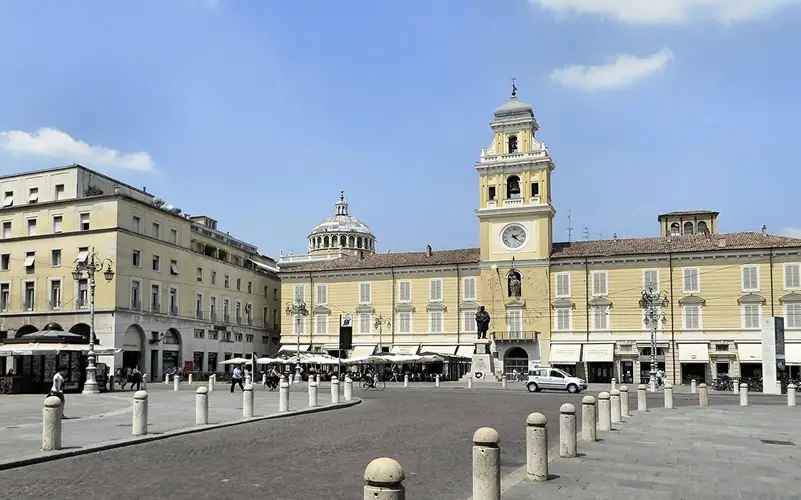
As enthusiasts who have visited the country know, in Italy it’s never just about the food – it’s about identity, history, and national and regional pride. Nowhere is this more evident than in Parma, a city that has given the world some of its most iconic ingredients and culinary traditions. Set in the heart of the Emilia-Romagna region – often considered the gastronomic soul of the country – Parma offers a dining experience that is both deeply rooted in tradition and gloriously indulgent.
To understand Parma, begin with arguably its most famous export: Prosciutto di Parma. This delicate, melt-in-the-mouth cured ham is aged for months in the hills surrounding the city, developing its signature sweetness and silky texture. In Parma, it’s typically served simply: thinly sliced, perhaps alongside warm bread or shards of local cheese. For an authentic experience, traditional trattorias and salumerie across the city showcase it at its best, often paired with a glass of lightly sparkling Lambrusco.
That cheese, of course, is none other than Parmigiano Reggiano, the “King of Cheeses.” Produced in and around Parma, this granular, nutty cheese is aged for a minimum of 12 months, though many wheels mature for far longer. Locals enjoy it in a number of ways: broken into chunks as an aperitivo, grated over pasta, or even drizzled with balsamic vinegar for a sweet-savoury contrast. Specialty food shops and traditional osterias are ideal places to taste it in its purest form.
Pasta holds a special place in Parma’s culinary identity, and one of its most beloved dishes is Anolini in brodo. These small, stuffed pasta parcels are filled with a rich mixture of meats, cheese, and breadcrumbs, then served in a deeply flavourful broth. Traditionally enjoyed during festive occasions, anolini can still be found year-round in classic trattorias, where recipes have often been passed down through generations.
Another local favourite is Tortelli d’erbetta, a dish that showcases Parma’s more delicate side. These large, square pasta parcels are filled with ricotta, spinach or chard, and plenty of Parmigiano Reggiano, then dressed simply with butter and sage. The result is comforting yet refined: a perfect example of how a few high-quality ingredients can create something exceptional.
For something a little heartier, try Culatello di Zibello, often considered the most prized of Parma’s cured meats. Made from the finest part of the pig’s leg and aged in the humid cellars of nearby villages, culatello is rarer and more complex than prosciutto, with a deep, nuanced flavour. It’s typically served as part of an antipasto spread in traditional restaurants, particularly those with strong ties to local producers.
No survey of Parma’s cuisine would be complete without dessert, and here Torta sbrisolona makes for a satisfying finale. Though originally from neighbouring Lombardy, this crumbly almond cake has found a welcome home in Parma’s bakeries and cafés. Paired with a glass of sweet wine or a strong espresso, it offers a rustic yet indulgent end to a meal.
As for where to find these dishes, the answer in Parma is refreshingly simple: almost everywhere, if you know where to look. The historic centre is dotted with family-run trattorias where menus change little over time, preserving culinary traditions with quiet confidence. Seek out places filled with locals rather than tourists, where handwritten menus and house wines signal authenticity over spectacle.
Ultimately, dining in Parma should go beyond merely ticking off a list, and involve immersing oneself in a culture that reveres food at every level. Each dish tells a story of place, season, and craft – one that unfolds slowly, bite by bite, in a city that has truly earned its reputation as one of Italy’s great culinary capitals.