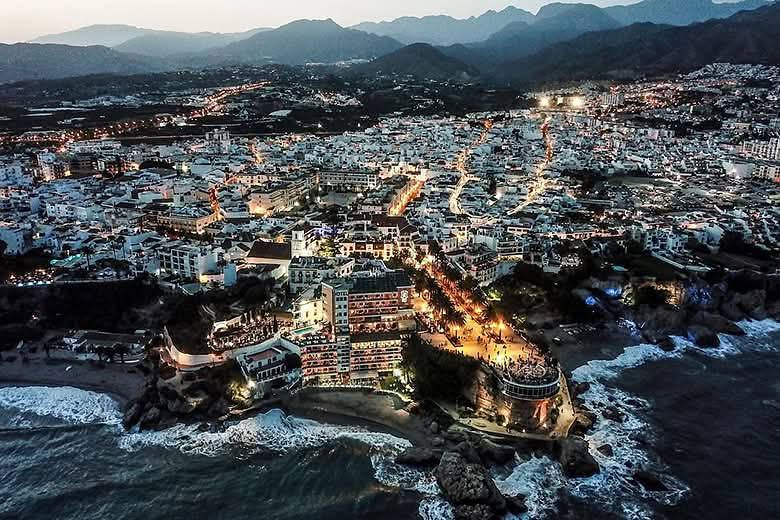
Málaga’s food culture is shaped by geography in the most literal sense. To the south, the Mediterranean laps gently against long stretches of beach and working harbours. Just inland, rugged mountain ranges rise quickly, dotted with white villages, olive groves and goat pastures.
The result is a cuisine that feels instinctively balanced: fresh seafood paired with rustic inland cooking, light coastal flavours offset by hearty mountain dishes. Nowhere else in Andalusia do sea and sierra meet so naturally on the plate.
The Mediterranean at the table
Along Málaga’s coastline, seafood is the star. The city’s beachside chiringuitos are famous for espetos de sardinas, skewered sardines grilled over open flames, traditionally on wooden boats filled with sand. Simple, smoky and intensely fresh, they capture the essence of Málaga’s relationship with the sea.
Beyond sardines, menus brim with anchovies, red mullet, baby squid and prawns, often served a la plancha or lightly fried. The beloved pescaíto frito, a mix of small fish dusted in flour and quickly fried, shows how Málaga’s coastal cooking values restraint, letting the quality of the catch speak for itself.
Mountain roots and rustic comfort
Travel just a short distance inland and the food becomes earthier. The mountains around Málaga have long sustained farming and livestock, shaping a cuisine built on durability and depth. Dishes like plato de los montes – a hearty combination of pork loin, chorizo, fried eggs and potatoes – reflect a time when food was needed as fuel for hard physical work.
Goat plays a central role in the region’s inland cooking, from slow-cooked stews to fresh cheeses produced in villages like Montes de Málaga and Axarquía. Olive oil, pressed from groves that blanket the hillsides, ties everything together, lending richness and warmth to even the simplest dishes.
Where sea meets sierra
Málaga’s most distinctive dishes often blur the line between coast and countryside. Ajoblanco, a cold soup made from almonds, garlic and olive oil, is rooted in mountain agriculture but frequently paired with grapes or seafood when served near the coast. Gazpachuelo, a comforting soup made with fish stock, potatoes and a warm mayonnaise base, bridges maritime ingredients with farmhouse technique.
This fusion reflects how people have lived here for centuries; fishing in the morning, farming inland, trading ingredients across short distances. The cuisine here is less about contrast and more about continuity.
Markets as the meeting point
Places like Atarazanas Market embody this blend perfectly. Seafood stalls sit alongside mountains of seasonal vegetables, cured meats and local cheeses. It’s a daily reminder that Málaga’s cooking doesn’t belong to one landscape alone; it draws equally from both.
A cuisine shaped by its landscape
Málaga’s food tells a story of coexistence. The freshness of the Mediterranean meets the robustness of the mountains, creating dishes that are unfussy yet deeply expressive of place. From grilled sardines by the beach to a slow-cooked mountain stew inland, the flavours are part of the same conversation; one shaped by sun, salt, stone and time. In Málaga, sea and mountain don’t compete – they collaborate.